The Hidden Costs of Moss Walls: Why Commercial Projects Are Switching to Plant Walls
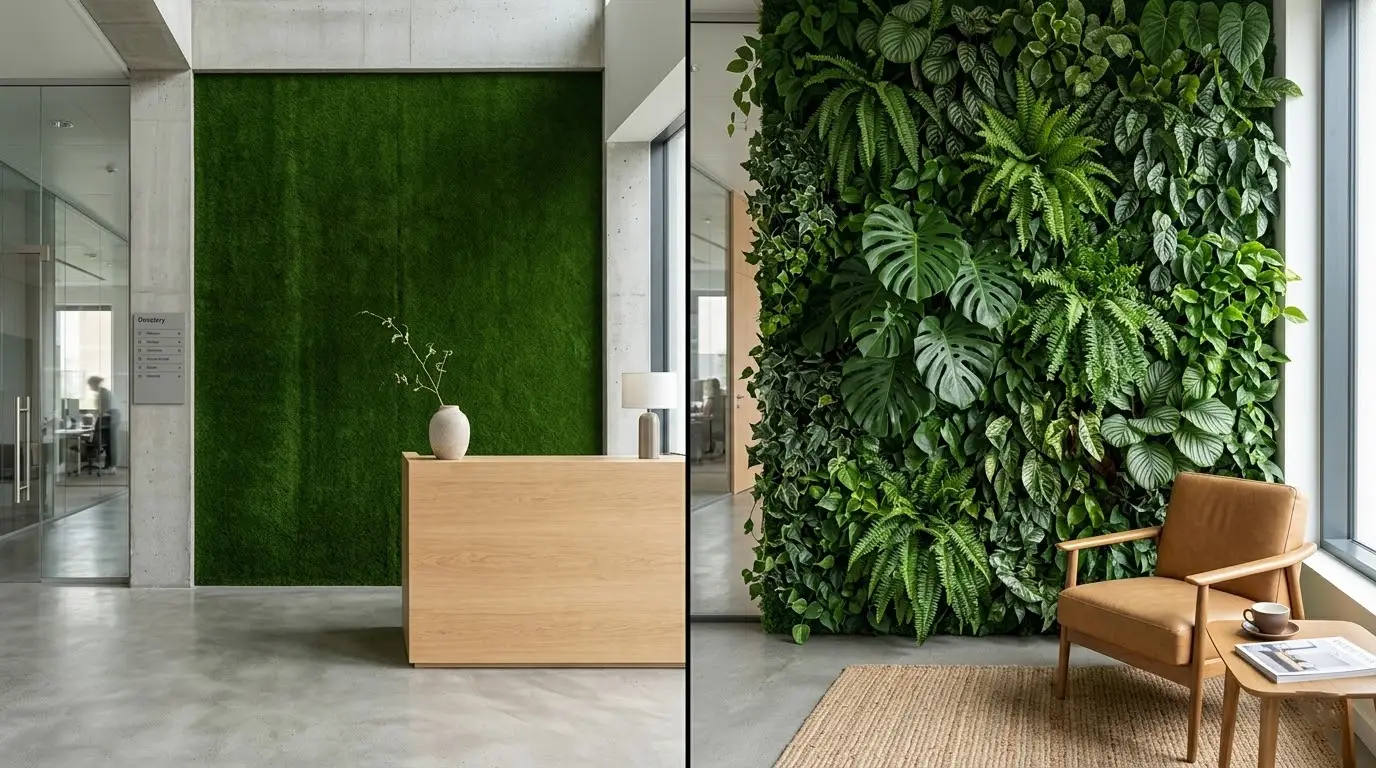
On Pinterest and Instagram, you have undoubtedly seen those stunning green moss walls. Their fuzzy texture and minimalist Nordic vibe perfectly align with the current trend of Biophilic Design. Therefore, more and more architects, interior designers, and business owners think of installing a moss panel first when planning office spaces, hotel lobbies, or high-end restaurants.
But can a plant moss wall that looks perfect in photos truly stand the test of time in real commercial environments and long-term daily use?
As a direct-source factory with over a decade of experience in manufacturing high-end commercial artificial plants, we have received countless “SOS” calls. Clients spent a fortune installing a moss board setup, only to face yellowing, dust accumulation, and even mold a year later, forcing them to tear it down and start over.
In this article, we will objectively and deeply analyze the pros and cons of artificial and preserved moss panels, and reveal why Premium Artificial Plant Walls are often the smarter, higher-ROI ultimate choice for large B2B projects and high-traffic commercial spaces.
Pros of Moss Walls
We must admit that moss has its unique charm in specific, controlled environments:
- Ultimate Soft Touch and Minimalist Aesthetics: It provides a flat, uniform, and quiet visual effect, perfect for a tech company reception or a meditation yoga studio that needs a minimalist background wall.
- Excellent Sound Absorption: The dense, sponge-like structure makes it a natural acoustic material, helping to reduce noise echoes in open-plan office spaces.
- No Soil or Irrigation Needed: Whether it is a preserved moss (real moss treated with glycerin) or a pure artificial option, they don’t require complex water circulation systems. This makes them much less hassle than maintaining a live moss wall or a living green wall.
However, commercial procurement cannot just look at the “day-one effect.” When we stretch the timeline to 3-5 years, the fatal flaws of these walls are completely exposed.
Cons of Moss Walls
If you are sourcing soft furnishings for a star-rated hotel or a high-end retail store in Europe, here are the “hidden landmines” you must understand before choosing moss:
-
The Ultimate “Vacuum Cleaner” That is Extremely Hard to Clean
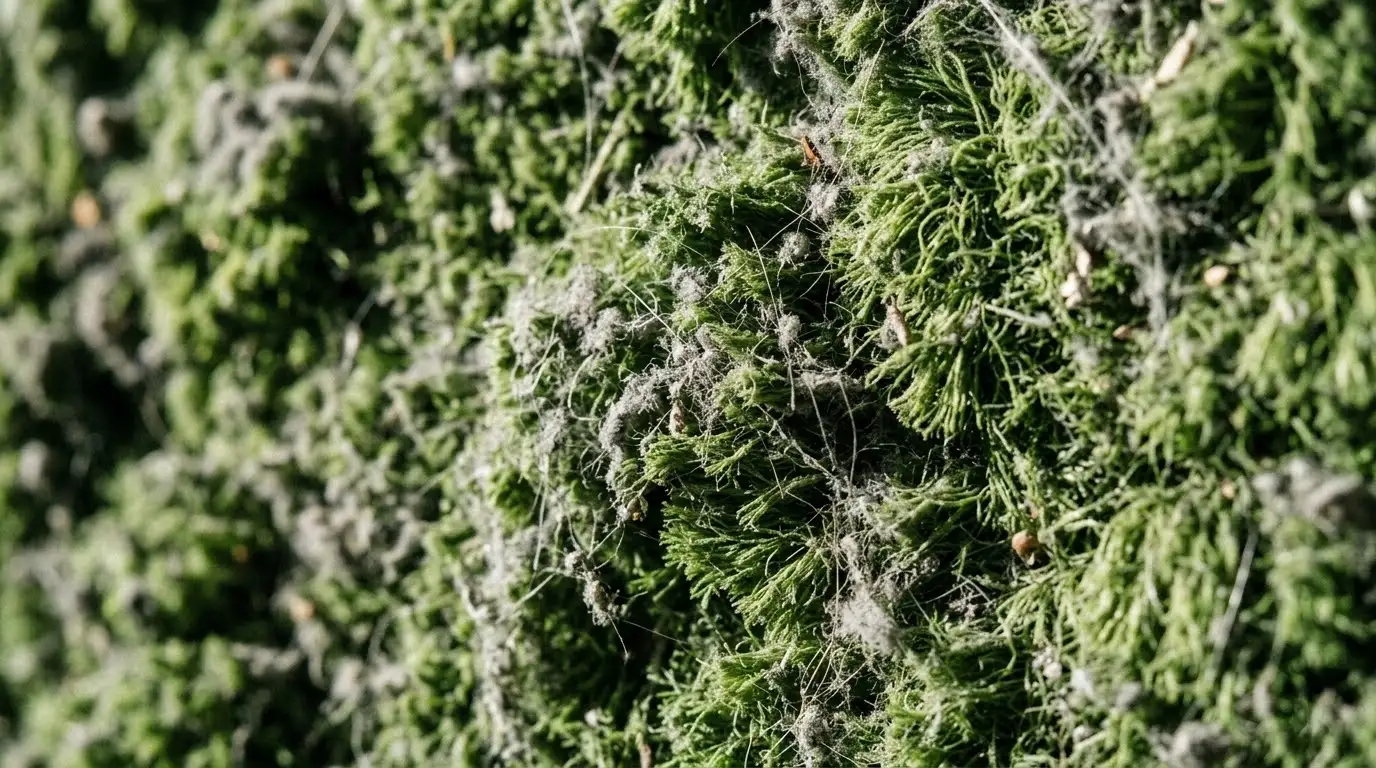
This is the biggest headache for all project managers. The surface is full of countless tiny pores and fuzz, making it the perfect collector for dust, dander, and suspended particles in the air.
Pain Point: You cannot wipe the moss with a wet cloth, nor can you wash it with water (this will ruin the preservative layer of preserved moss or cause artificial moss to shed). You can only carefully blow it with a low-power vacuum or a cold air blower. In Europe, where labor costs are high, this is a time-consuming and inefficient maintenance disaster. -
The UV Defect: It Dies in the Light
Most moss products absolutely cannot be installed outdoors or in direct sunlight near large glass windows.
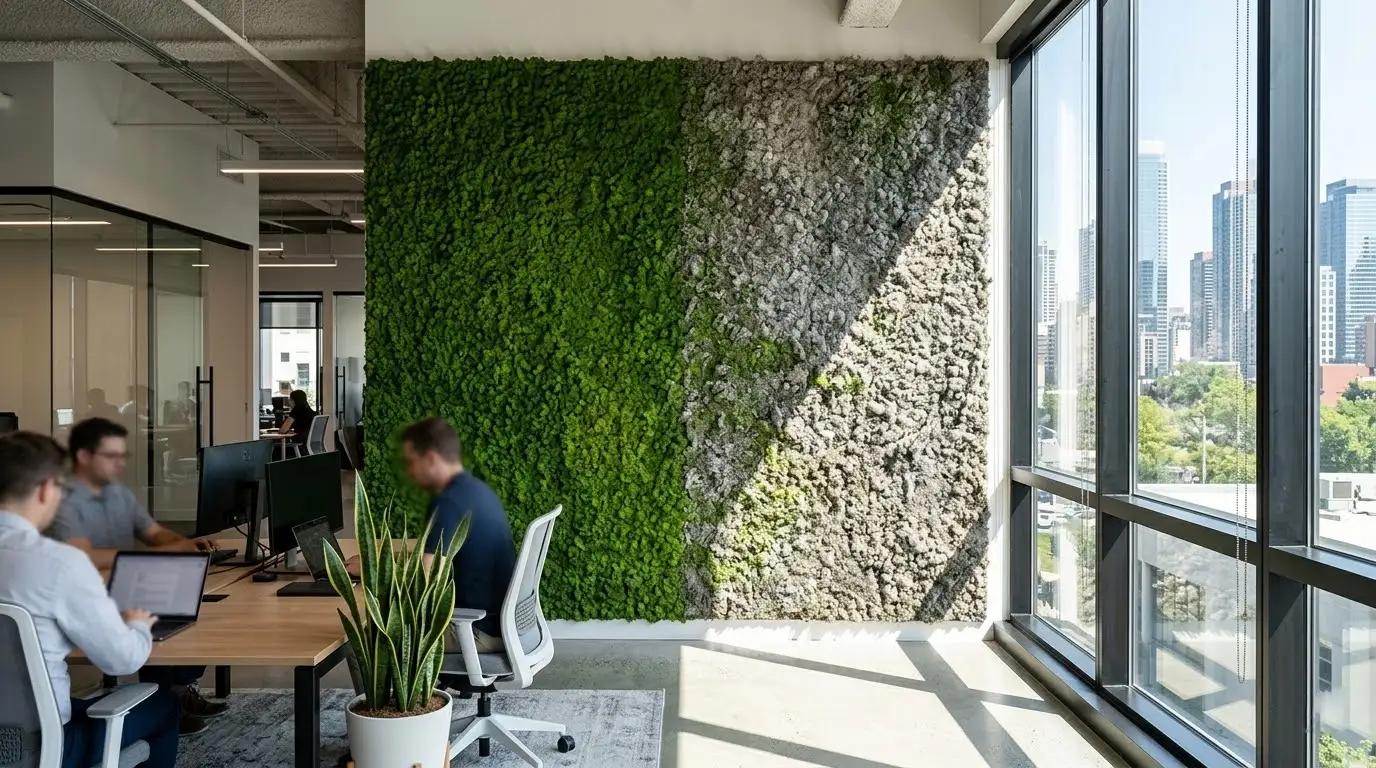
Pain Point: Neither dyed preserved moss nor ordinary plastic moss has undergone strict anti-UV (ultraviolet) treatment. Under strong light, they will fade from emerald green to a lifeless grey-white or blue-purple in just a few months. -
Extremely Demanding on Humidity (Mold vs. Brittle Cracks)
Moss is extremely “delicate”; it’s like a baby that needs careful pampering.
Pain Point: If the environment is too dry (like indoors with strong heating in winter, where humidity drops below 40%), the moss becomes brittle, crumbly, and shatters into pieces with a gentle touch. If the environment is too humid (like near a restroom, SPA, or in coastal cities during the rainy season with humidity above 70%), it is extremely prone to breeding black mold and emitting an unpleasant odor. -
Monotonous Design and Lack of Depth
A moss installation is essentially a “flat green surface.” It lacks a 3D effect, shadow variations, and the diversity of a plant community. On a large wall, a pure moss installation often looks monotonous, cheap, or even like a giant piece of green carpet hung on the wall, completely lacking vitality.
Why Choose Premium Artificial Plant Walls
When large commercial projects require large-scale greenery, zero maintenance costs, and absolute safety, Premium Artificial Plant Walls (made of 100% PE material) have become the industry’s standard answer.
Compared to fragile moss, engineering-grade artificial plant walls show overwhelming advantages:
-
3D High Realism Technology Breaking the Flatness
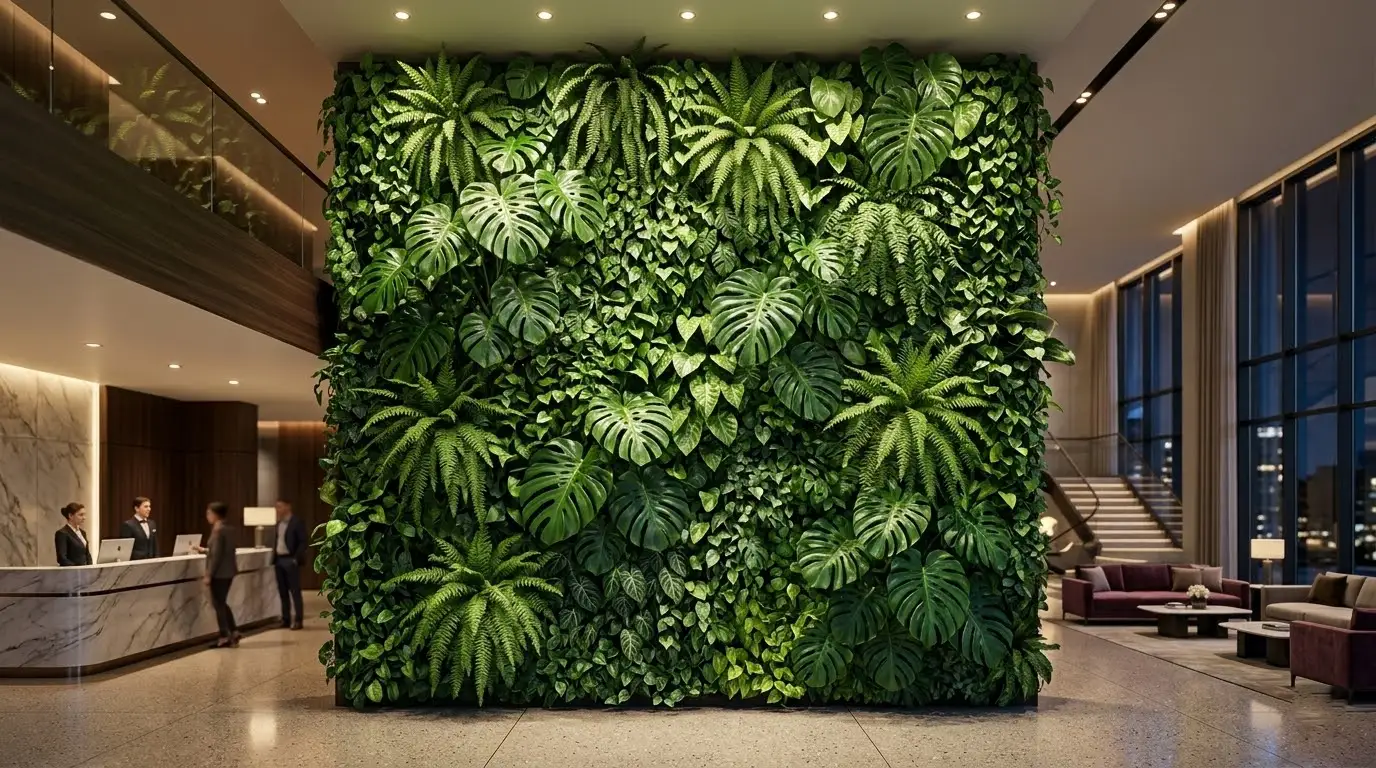
Our top-tier artificial plant walls use real plants (like Monstera, ferns, ivy) for 3D mold-making and injection molding. They not only have rich color gradients but also staggered levels of depth. You can freely customize mixed foliage to create tropical rainforests, English manors, or modern geometric styles, delivering a visual impact far beyond flat moss. -
Truly Zero Maintenance and Washable
Manufactured with high-density polyethylene (PE), our artificial plant walls are completely unafraid of dust and water.
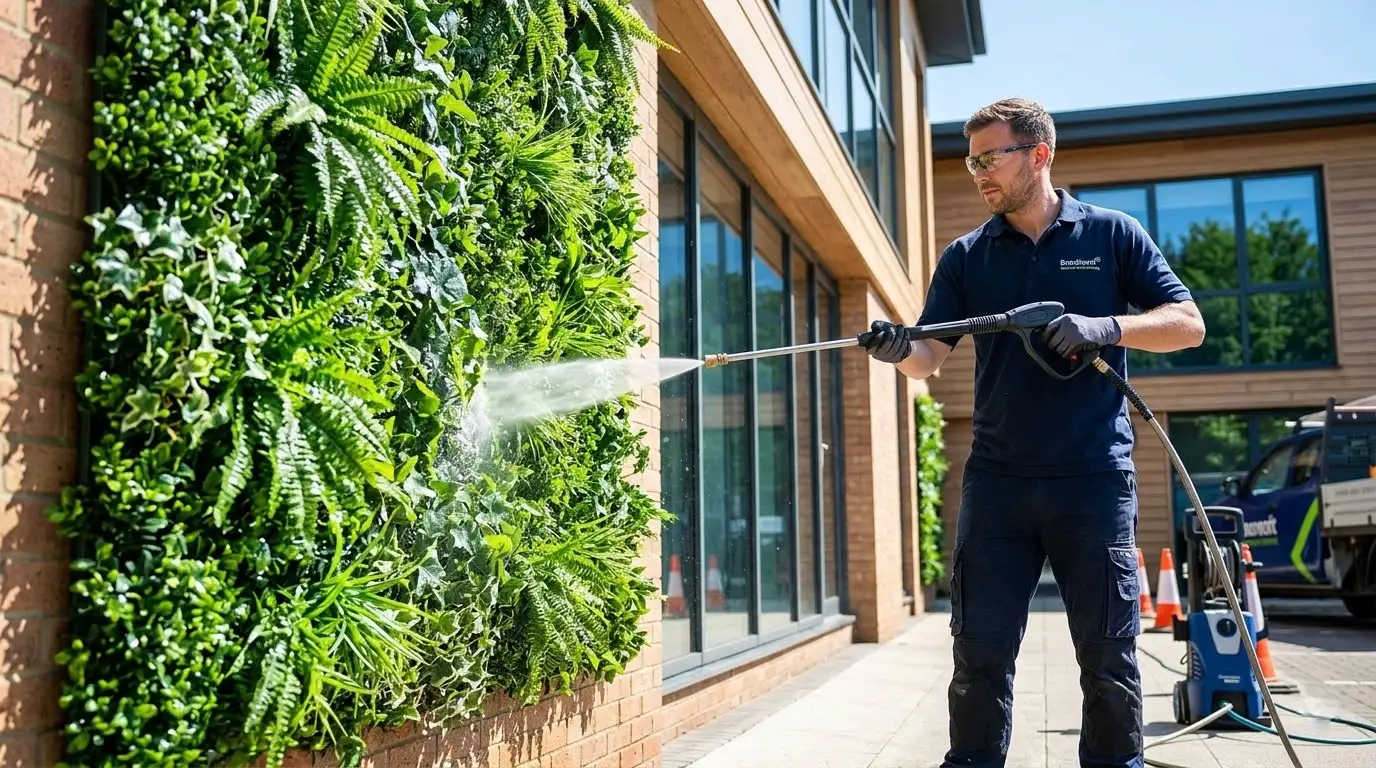
Maintenance Solution: Indoors, just occasionally wipe with a damp cloth or sweep with a feather duster. For outdoor applications, cleaners can simply wash them directly with a high-pressure water gun. They look brand new in minutes, completely slashing post-maintenance labor costs. -
Core Technology: Lab-Grade UV Stability & Fire Retardant Certifications
This is the essential difference between a professional B2B factory and a general retailer:
UV-Stable and Fade-Resistant: We inject high-concentration UV inhibitors (HALS) during the raw material melting stage—this is absolutely not just a surface spray. The products undergo strict ISO and ASTM testing, remaining vibrant green even after 3-5 years of baking under the sun in Spain or Italy.
Commercial Fire Safety Compliant: We deeply understand the strict fire safety requirements for commercial spaces in markets like Europe. Our engineering-grade plant walls have passed SGS and TUV testing, meeting international Fire Retardant standards like EN71-2. In the event of a fire, they effectively stop the flame from spreading, ensuring public safety.
| Evaluation Dimension | Artificial/Preserved Moss Walls | Premium Artificial Plant Walls |
|---|---|---|
| Applicable Scenarios | Indoors only, away from light, constant humidity | Indoors and outdoors, fearless of extreme cold, heat, and strong light |
| Visual Effect | Flat, monotonous velvet texture | 3D, multi-layered, rich plant variety |
| Cleaning & Maintenance | Extremely hard to clean, gathers dust, not washable | Very easy to clean, dustproof & waterproof, supports high-pressure washing |
| Weather Resistance (UV Stability) | Extremely poor, easily fades and turns brittle in light | Excellent, raw materials embedded with UV factors, won’t fade for years |
| Commercial Safety Certification | Most lack fire certifications, highly flammable | Complies with strict fire retardant standards like EN71-2 and SGS |
| Expected Lifespan | 1 – 3 years (shorter if environments are poor) | Indoors: 8-10+ years / Outdoors: 3-5+ years |
| Long-Term Overall ROI | Low (expensive upfront, extremely high maintenance/replacement costs later) | Extremely High (one-time investment, truly maintenance-free) |
Conclusion
A thoughtfully designed green wall should be a traffic-driving asset in a commercial space, not a constant, money-draining maintenance burden.
A moss wall might be a nice touch in a small, exquisite, and perfectly climate-controlled residential corner. But for demanding, high-traffic commercial projects that focus on long-term Return on Investment (ROI)—such as hotel facades, restaurant partitions, or corporate headquarters’ exterior walls—it is clearly too fragile.
If you are planning your next major soft furnishing or architectural project, and don’t want to be forced to repurchase in two or three years because of fading, dust, and failing fire inspections, then high-quality artificial plant walls that pass EU fire standards and possess top-tier UV resistance are your only right choice.
Ready to upgrade your commercial space with a truly long-lasting green landscape?