How to Make Fake Soil for Artificial Plants: The Commercial Potting Guide
Table of Contents
- Introduction: The “Last 5%” That Defines Quality
- 1. Why Use Artificial Soil Instead of Real Dirt?
- 2. How to Make Fake Dirt: The Coffee Ground Method
- 3. Modern Faux Dirt: The Black Sand Method
- 4. Alternative Surface Treatments
- 5. FAQ: Common Questions About Artificial Planting
- Conclusion: Durability is the Ultimate Aesthetic
Introduction: The “Last 5%” That Defines Quality
In high-end commercial landscaping, we often say that “the last 5% of the installation determines 100% of the perception.” You can specify the most expensive, botanically accurate Ficus Lyrata, but if the base is filled with loose moss or visible Styrofoam, the illusion of quality collapses immediately.
For interior designers and facility managers, learning how to make fake soil for artificial plants is a critical skill. Loose fillers are liabilities in public spaces. To maintain a pristine look, you need a permanent solution.
This guide consolidates the industry’s best practices for creating solidified fake dirt (also known as artificial soil or faux dirt). These methods are standard for B2B projects where durability, hygiene, and low maintenance are non-negotiable.
1. Why Use Artificial Soil Instead of Real Dirt?
Before we discuss how to make fake dirt, we must address a common question from designers: “Can you plant artificial plants in soil?”
While technically you can, strictly speaking, you should not use real earth in a commercial setting. Here is why we recommend fake soil for artificial plants over the real thing:
- Hygiene: Real dirt contains organic matter that attracts pests like fungus gnats. Artificial dirt is inorganic and pest-free.
- Maintenance: Real soil is loose. If a pot is tipped over, it creates a mess. Solidified faux dirt stays in place permanently.
- Weight: Filling a large planter with real heavy soil is unnecessary. Artificial soil systems use lightweight foam structures.
2. How to Make Fake Dirt: The Coffee Ground Method
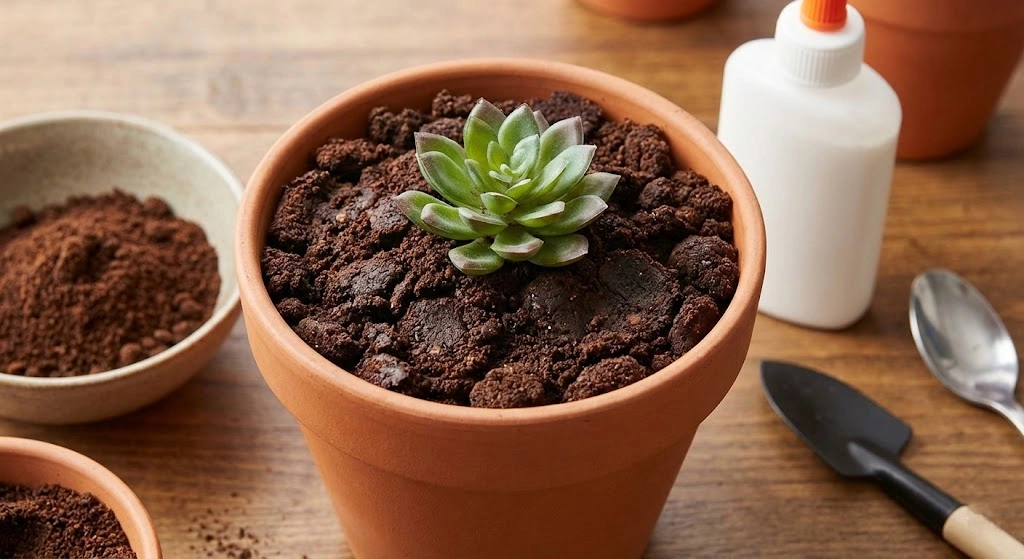
This is the gold standard for creating fake dirt for fake plants in hotels and offices. It perfectly replicates the texture of rich, dark potting soil but dries into a hard, non-transferable shell. It is also a popular technique when making fake dirt for crafts.
Materials Checklist:
- Dry Used Coffee Grounds: The primary aggregate for realistic fake soil.
- PVA Glue (White School Glue): The binder.
- Black Acrylic Paint: To darken the mixture.
- Water: To adjust viscosity.
The Formulation (Standard Ratio):
To create the perfect fake dirt for artificial plants, use this ratio:
- 4 Parts Coffee Grounds
- 1 Part PVA Glue
- 0.5 Parts Black Paint
- Splash of Water (add slowly until consistency resembles thick oatmeal).
Application Steps:
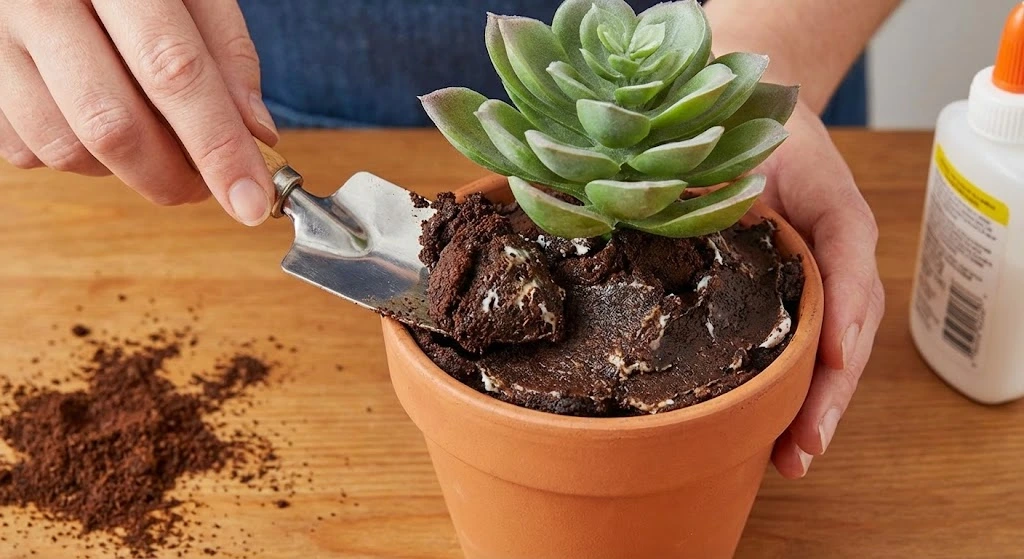
- Prep the Base: Ensure your Styrofoam base is secure.
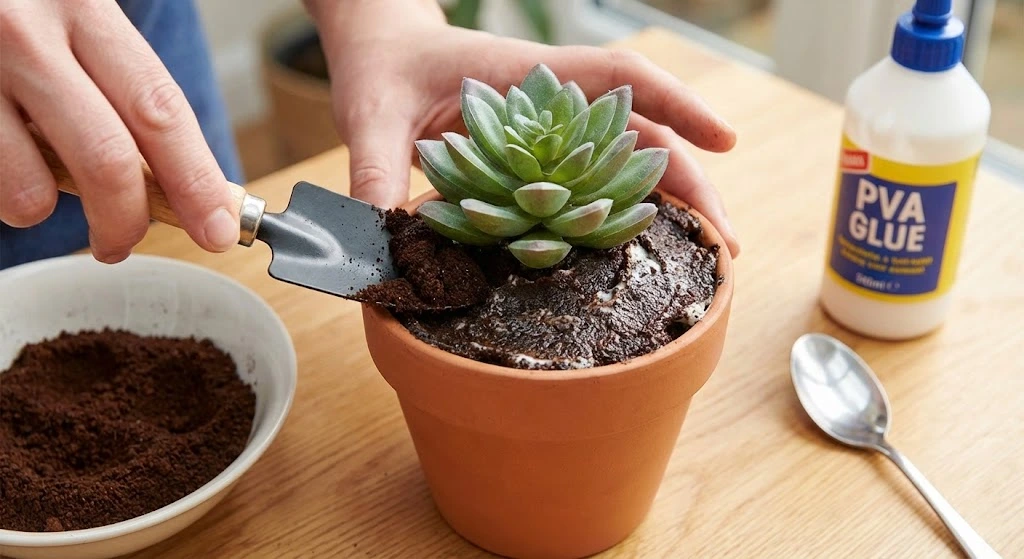
- Mix: Combine ingredients to create your artificial dirt paste.
- Spread: Trowel the fake soil mixture over the foam base (approx. 1-1.5 cm thick).
- Texture: Roughen the surface with a fork to mimic the crumble of real earth.
- Cure: Allow to air dry for 24-48 hours.
Result: A highly realistic artificial soil surface that looks like damp earth but is hard to the touch.
3. Modern Faux Dirt: The Black Sand Method
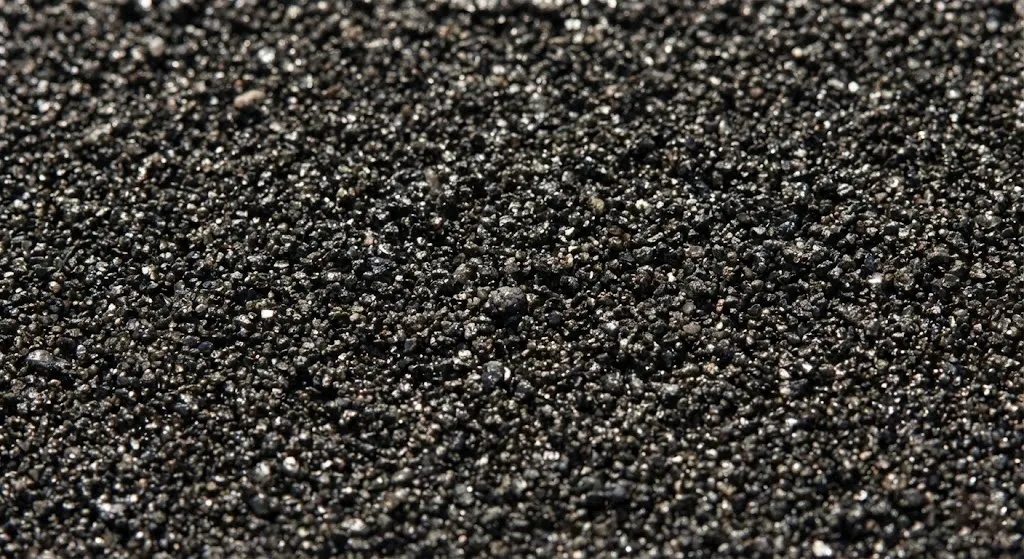
For modern architecture, the organic look of coffee-based fake dirt might be too rustic. In these cases, we use black sand or grout to create a sleeker artificial dirt finish.
The Pour-Over Technique:
- Dry Laying: Pour coarse black aquarium sand over the foam base. This acts as your clean faux dirt layer.
- Saturation: Mix PVA glue with water (50/50). Spray or pour this over the sand.
- Curing: Once dry, this forms a “sandstone-like” crust.
This method is excellent if you need fake soil for artificial plants in high-end retail spaces where dust must be minimized.
4. Alternative Surface Treatments
If you don’t want the look of fake soil, here are other professional ways to cover the base:
- Fixed River Stones: Mix stones with epoxy. This is safer than loose stones and cleaner than artificial soil.
- Preserved Moss: Secure with strong adhesive spray.
5. FAQ: Common Questions About Artificial Planting
Can you plant artificial plants in soil?
We do not recommend it. While you can put artificial stems in real dirt, the moisture in the soil will eventually rust the wire core of the artificial plant, leading to structural failure. It is better to use dry foam and cover it with fake dirt for artificial plants.
How to make soil from dirt for fake plants?
If you are asking how to make soil from dirt suitable for indoor use, you would need to sterilize it to kill bugs. However, it is much easier and cleaner to make fake dirt using the coffee ground method described above. This avoids all pest issues.
Is this fake dirt suitable for crafts?
Yes. The coffee ground and glue recipe is widely used as fake dirt for crafts, dioramas, and architectural models because it is cheap, non-toxic, and extremely realistic.
Conclusion: Durability is the Ultimate Aesthetic
In a residential home, loose dirt is acceptable. In a 500-room hotel, it is a maintenance nightmare. By utilizing these “solidified fake soil” techniques, you protect the asset and ensure a high-quality finish.
Whether you choose the organic coffee faux dirt or the modern black sand artificial soil, the key is stability.
TwinkleTrees offers Pre-Potted & Fixed solutions. Our factory-finished planters arrive with the fake soil already cured and weights balanced, ready for immediate deployment.