How to Arrange Outdoor Artificial Flowers in Pots: The 2026 Guide
Let’s be honest: Most people don’t know how to use outdoor artificial flower arrangements. They buy a plastic plant, stick it in a light pot, and two weeks later, the wind blows it over, or the sun turns it blue.
If you want outdoor fake flowers to look real and last for years, you cannot just “set it and forget it.” You need to understand materials, mechanics, and design logic.
This guide is not about “decorating tips.” It is a technical manual on how to choose, secure, and maintain artificial flowers in pots for commercial and residential projects.
Part 1: Material Selection (Don’t Buy Garbage)
Before you start arranging, you must buy the right product. The biggest mistake we see is using “indoor silk” for outdoor faux floral arrangements.
1. The “Blue Leaf” Problem
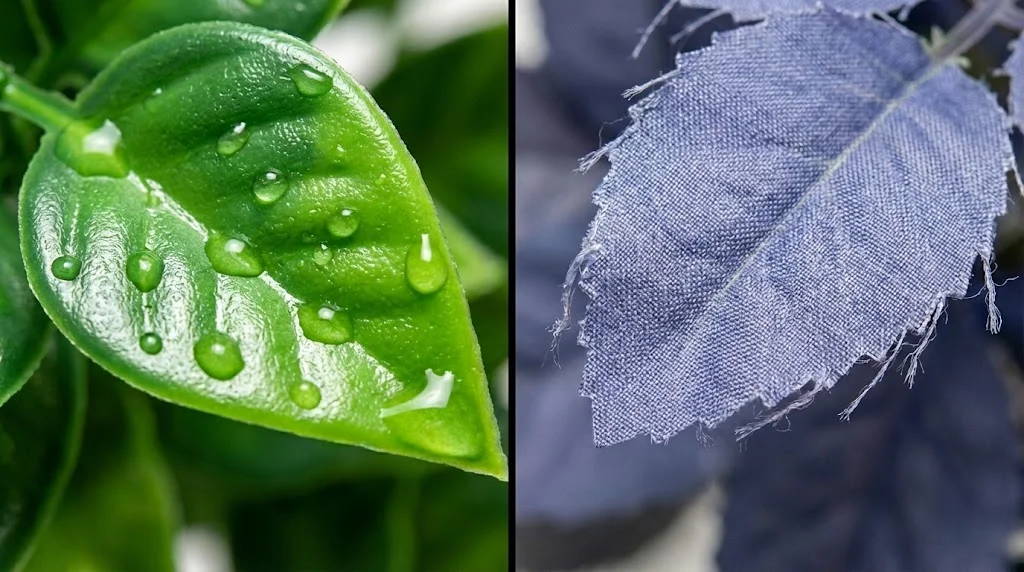
If you buy cheap fake flowers outdoors, they will turn blue or purple in 3 months.
- Why: Cheap manufacturers spray UV coating on the surface. Rain washes it off.
- The Fix: You need outdoor artificial flower plants made with UV-Injected PE (Polyethylene). The UV stabilizer is mixed into the plastic pellets before molding. This is the only way to survive 3,000+ hours of direct sunlight.
2. Fabric vs. Plastic
- Fabric (Silk/Polyester): Good for dry porches. Bad for rain. Wet fabric gets heavy, sags, and grows mold.
- PE (Plastic): Best for artificial flowers for outside use. It sheds water, holds its shape in wind, and is easier to clean.
Part 2: The Mechanics (How to Put Fake Flowers in a Pot)
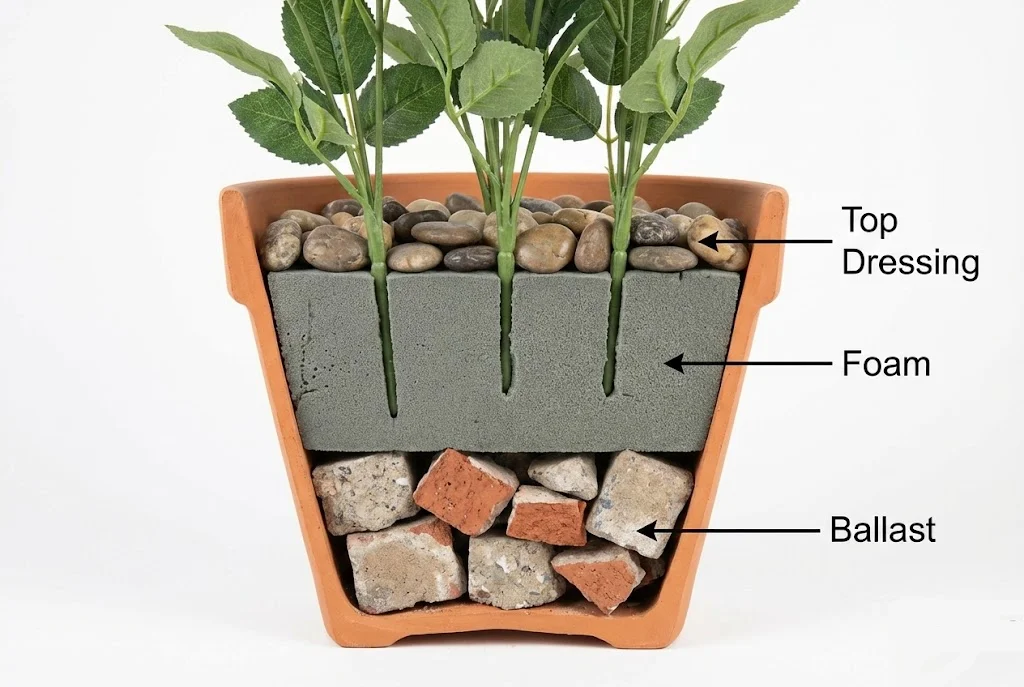
Real plants have heavy soil balls. Fake flower pots are top-heavy and light. If you don’t weight them down, they will tip over.
Here is the step-by-step process we use for hotel installations:
Step 1: Weight and Drainage
Do not fill the whole pot with foam.
- Drainage: Drill holes in your fake flower planters. Even though the plant doesn’t drink, the pot catches rain. Standing water breeds mosquitoes and rots the wire stems.
- Ballast: Fill the bottom 25% of the pot with heavy material.
- Home Use: Bricks, gravel, or sand bags.
- Commercial Use: Quick-setting concrete. This makes the artificial flower pots theft-proof and wind-proof.
Step 2: The Foundation (Foam)
Don’t use white Styrofoam (it crumbles). Use High-Density Floral Foam (Gray or Green).
- Cut the foam blocks to fit tightly inside the pot.
- Glue the foam to the bottom weights using construction adhesive (Liquid Nails).
Crucial: Leave a 1-inch gap between the foam and the pot rim for your “top dressing.”
Part 3: The Design Formula (Thriller, Filler, Spiller)
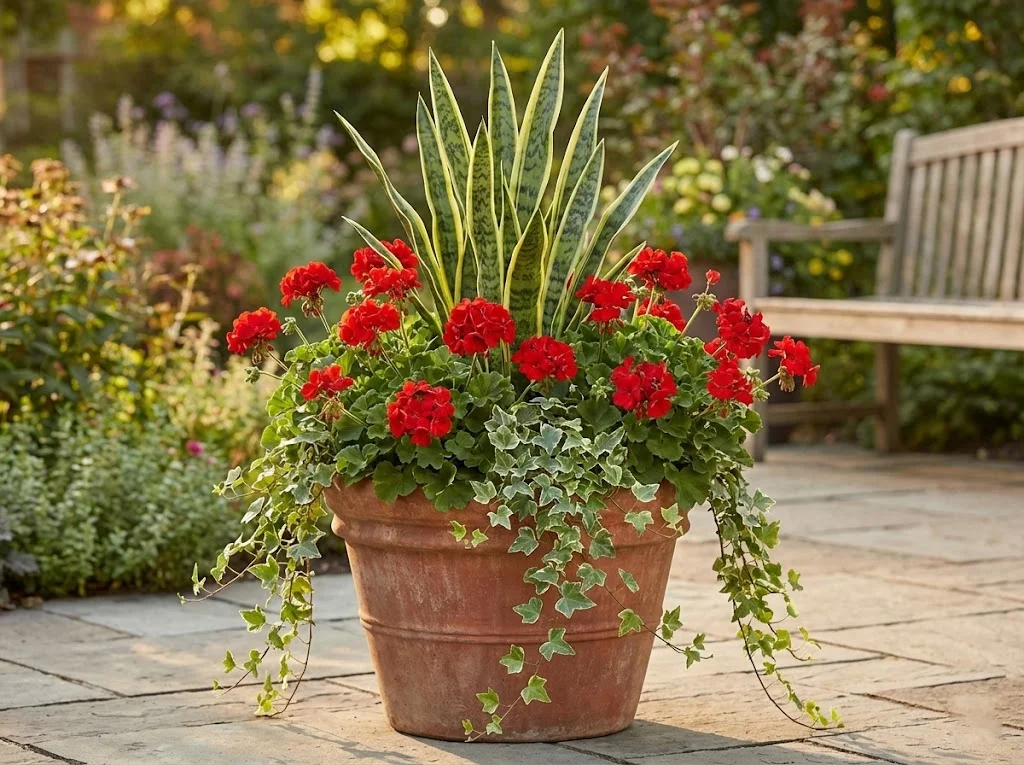
To make artificial flower arrangements in pots look professional, follow this landscape architecture rule. It works for every size, from a small balcony to a large hotel entrance.
1. The Thriller (Height)
This is your centerpiece. It establishes the scale.
- Placement: Center of the pot.
- Best Plants: Tall Faux Grasses, Snake Plants (Sansevieria), or a 3ft Cypress Tree.
- Tip: If the stem is too short, wire it to a wood pick to add height.
2. The Filler (Volume)
These plants fill the empty space and hide the mechanics.
- Placement: Around the base of the Thriller.
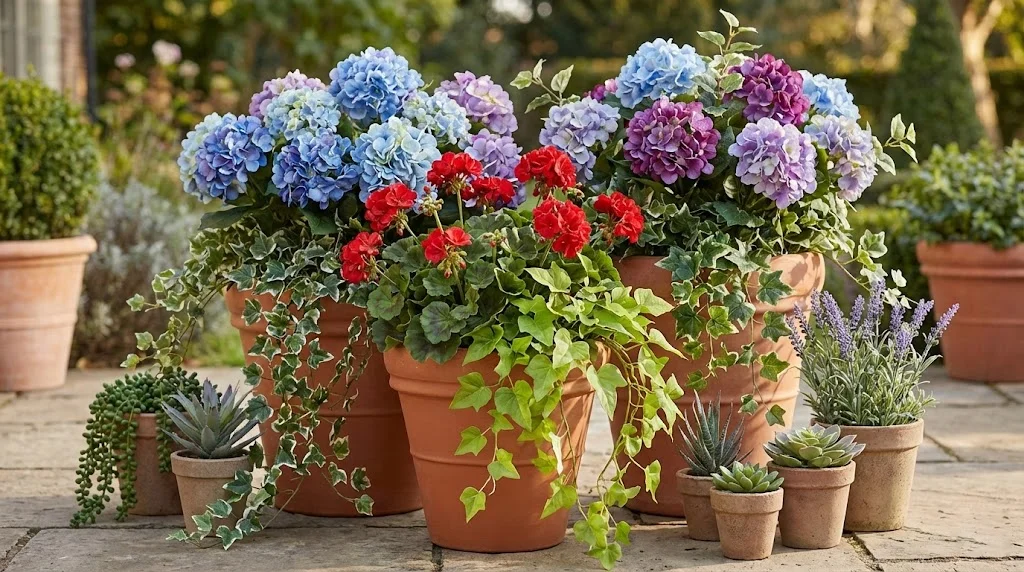
- Best Plants: Artificial garden flowers outdoor like Geraniums, Hydrangeas, or Boxwood spheres.
- Quantity: Use odd numbers (3 or 5 bunches). Even numbers look artificial.
3. The Spiller (Realism)
This is the most important step for realism. Real plants grow over the edge of the pot.
- Placement: The rim of the pot.
- Best Plants: Artificial English Ivy, Ferns, or trailing Petunias.
- Why: Breaking the hard edge of the planters with artificial flowers tricks the eye into thinking it is natural growth.
Part 4: Installation Techniques (Making it Look Real)
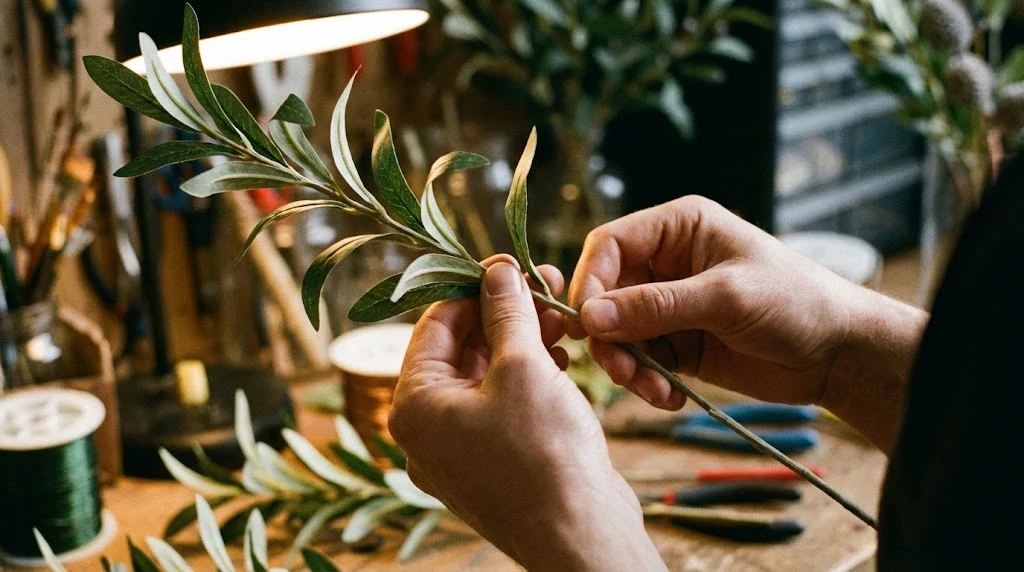
Buying the best fake flowers for outdoors is only half the battle. You have to “work” the material.
1. The “Fluffing” Process
Factory flowers come flat in a box.
- Action: Bend every single stem. Real plants don’t grow straight up; they reach for the sun.
- Technique: Curve the leaves outward. Spread the petals. If the plastic is stiff, use a hair dryer to warm it up, then bend it.
2. Hiding the “Fake” Parts
Nothing screams “fake” like seeing the floral foam.
- Top Dressing: Cover the foam completely.
- Materials: We recommend natural river rocks, black mulch, or dried moss.
- Pro Tip: For outdoor fake flower arrangements in windy areas, mix diluted white glue with the mulch. When it dries, it creates a hard, wind-resistant crust that still looks like loose dirt.
3. Mixing with Real Plants
You don’t have to go 100% fake.
- Strategy: Use real drought-tolerant shrubs (like Boxwood) as the base, and insert stems of outdoor silk flowers and plants for seasonal color.
- Benefit: The real leaves provide the smell and texture; the artificial flowers in pots provide the color without needing water.
Part 5: Maintenance (It’s Not Zero Maintenance)
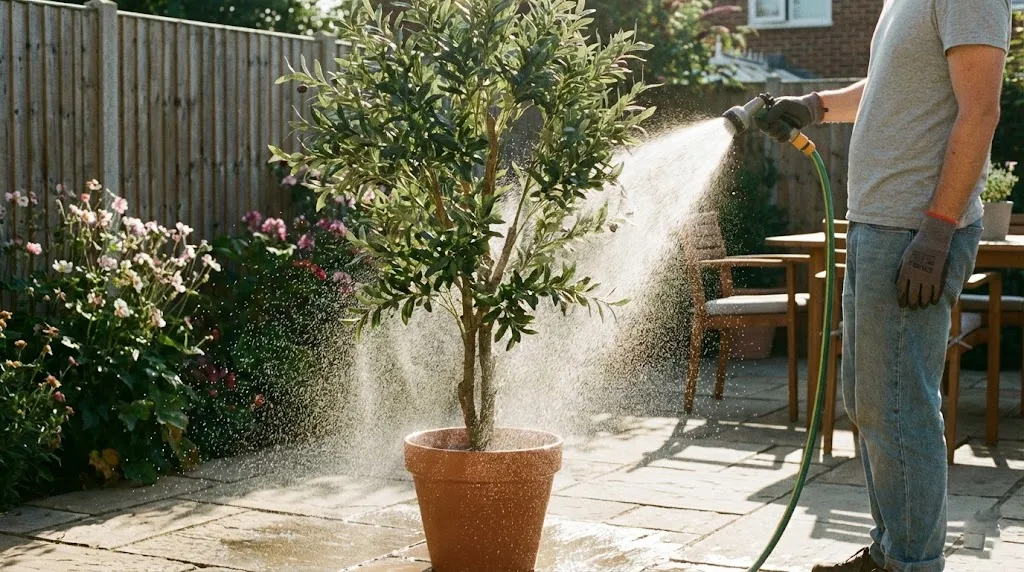
Yes, fake flowers with pots are easier than real ones, but they get dirty.
- Cleaning: City dust, pollen, and bird droppings will make leaves look dull. Hose down your outdoor artificial flower arrangements once a month.
- UV Refresh: If you live in Arizona or Florida, spray your plants with a clear UV-protectant spray (like Krylon UV-Resistant Clear) once a year. This adds a layer of protection to artificial flowers for outside garden.
- Winter Storage: Polyethylene (PE) handles frost well. However, if you have ceramic pots, bring them inside during freezing weeks to prevent the pot from cracking.
FAQ: Common Questions
Q: What are the best fake flowers for outdoor planters in high wind?
A: Avoid large-leaf plants like Faux Banana Trees (they act like sails). Stick to aerodynamic shapes like fake potted flowers for outdoors using Boxwood, Grasses, or Pine. Secure the stems into the foam with hot glue.
Q: Can I use indoor artificial flowers outside if I spray them?
A: We don’t recommend it. The fabric of indoor flowers is too thin. Even with spray, the rain will ruin the glue holding the petals together. Always buy designated outdoor artificial flower plants.
Q: How long do outdoor artificial flowers last?
- Cheap Polyester: 3-6 months.
- UV-Treated Fabric: 1-2 years.
- UV-Injected Polymer (TwinkleTrees Standard): 3-5 years depending on latitude.
Summary
Creating realistic outdoor artificial flower arrangements is about engineering. Use heavy weights for stability, UV-injected PE for longevity, and the “Thriller-Filler-Spiller” design rule for aesthetics.