How Long Do Outdoor Artificial Plants Last? The Truth About UV & Materials
As a leading artificial plant manufacturer, the question we get asked most often is: “How long do these artificial plants and artificial flowers actually last?”
We have all seen some cheap fake plants that, after a period of time, either fade or turn brittle after just one summer due to sun exposure. In this guide, we will detail the factors affecting the actual lifespan of artificial plants and how to extend their service life.
What is the Average Lifespan of High-Quality Artificial Plants?
To be honest, for any project manager, the biggest headache is having to replace withered plants after just one year.
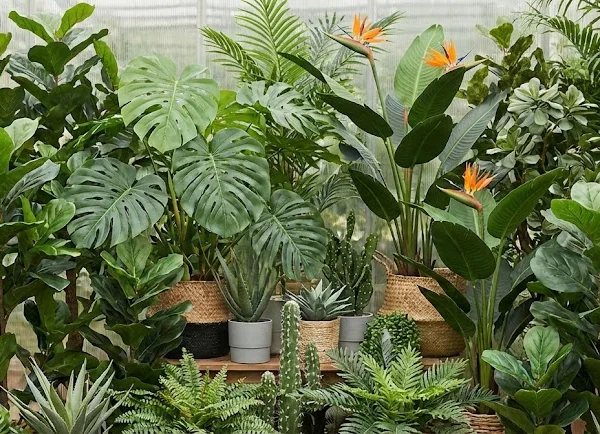
Outdoor Artificial Plants
I witnessed this firsthand at a seaside resort project. To save budget, they bought cheap, untreated fake plants. Six months later, under the intense coastal sun, these plants turned grey and brittle. They had to repurchase all new outdoor artificial plants from scratch. That is the cost of using low-quality products.
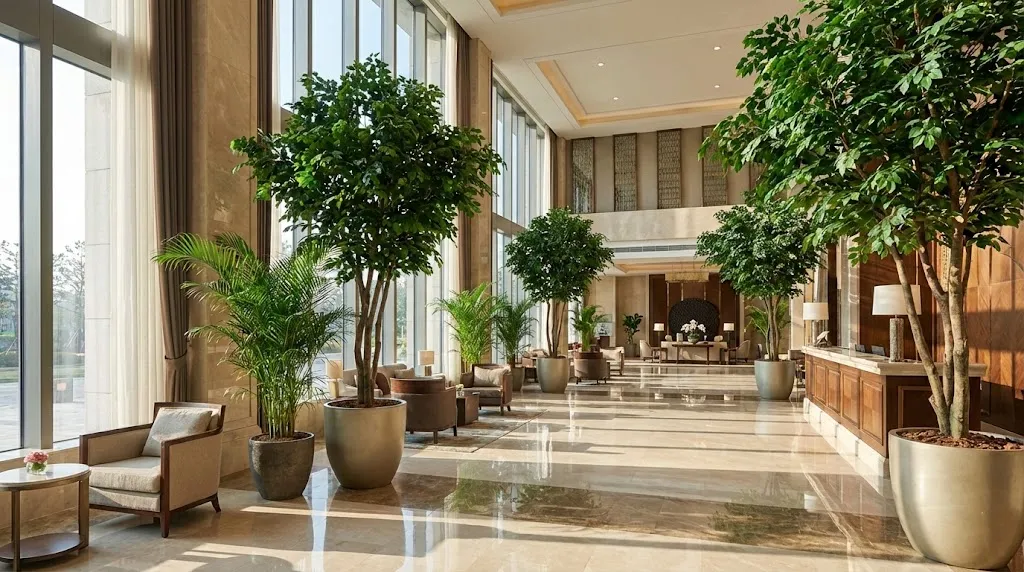
Indoor Artificial Plants
I recently visited a hotel lobby we furnished back in 2012. More than a decade later, these plants only needed simple dusting and still looked as fresh and new as when they were first installed. Indoors, high-quality artificial plants mean they can last for 10 to 15 years.
How We Solve the Fading Problem
Why do our artificial plants survive while other factories’ do not? It is because of our production standards.
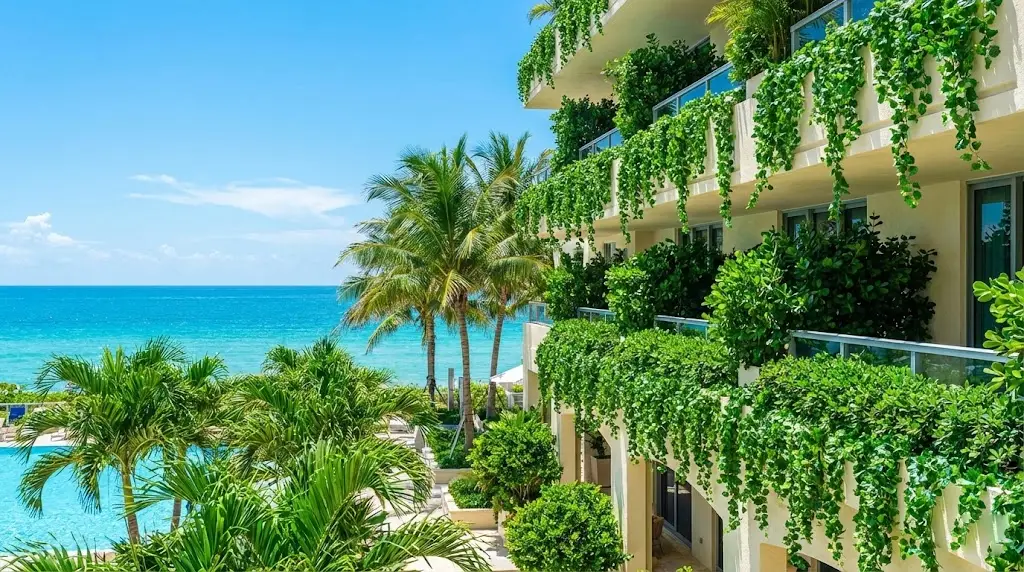
We use premium anti-fade pigments, and we mix UV inhibitors directly into the raw plastic material during injection molding; we do not simply spray a layer of anti-UV coating. Our products comply with the ISO 4892-3 standard and have passed the ASTM G154 test. Under testing conditions equivalent to the intense sunlight of Florida, our plant leaves remain vibrant after prolonged UV exposure. For commercial applications like hotel facades or beach resorts, this is not just a detail on a spec sheet—it determines whether the landscape stays green or becomes plastic waste.
Key Factors That Determine The Lifespan of Fake Plants
1. Materials Used in Artificial Plants
Most artificial plants are crafted from polyester or Polyethylene (PE). These materials are naturally tough, durable, and resistant to fading. If treated with proper UV protection, they can withstand the elements for 3-5 years. While silk artificial flowers look incredibly realistic, they are not suitable for outdoor use because they will fade within just a few months under direct sunlight.
If your fake plants are intended for outdoor use or hot, arid regions, selecting UV resistant artificial plants is non-negotiable. These plants are engineered with UV stabilizer HALS (Hindered Amine Light Stabilizers). This additive allows outdoor artificial plants to endure harsh sunlight exposure without fading or turning brittle.
| Material | Visual & Tactile Effect | Core Pros & Cons | Best Application | Expected Lifespan |
|---|---|---|---|---|
| PE (Polyethylene) | High realism, thick waxy texture, natural matte color. |
✓ Pros: Most weather-resistant (UV Stable), eco-friendly, odorless.
✕ Cons: Higher initial investment cost.
|
Outdoor green walls, large artificial trees, premium turf. |
Indoor: 8–10+ Yrs
Outdoor: 3–5 Yrs
|
| PVC | Bright colors, diverse shapes, slightly thinner plastic feel. |
✓ Pros: Affordable, fire-retardant, easy to shape.
✕ Cons: Poor UV resistance (fades fast), slight plastic odor.
|
Budget indoor decor, short-term events. |
Indoor: 3–5 Yrs
Outdoor: 1–2 Yrs
|
| PU (Polyurethane) | “Real Touch” effect. Extremely realistic, soft, and fleshy feel. |
✓ Pros: Closest feel to nature, moisture resistant.
✕ Cons: Yellows in sunlight, expensive.
|
High-end indoor florals (Tulips, Calla Lilies). |
Indoor: 5–8 Yrs
(Not Rec. for Outdoor)
|
| Silk / Fabric | Lightweight, detailed edges, rich color gradients. |
✓ Pros: Best for delicate aesthetics and movement.
✕ Cons: Fears water & dust, fades rapidly outdoors.
|
Weddings, indoor arrangements, props. |
Indoor: 2–3 Yrs
(Outdoor: < 2 Yrs)
|
| Latex | Glossy surface, thick and soft structure. |
✓ Pros: Great for thick-leaved plants (Agave, Snake Plant).
✕ Cons: Coating may crack or get sticky over time.
|
High-quality indoor potted foliage. | Indoor: 3–5 Yrs |
2. The Environment Around the Artificial Plants
Even the best fake plants are affected by the environment. Understanding the impact of environmental factors on artificial plants helps extend their lifespan.
Impact of UV Rays on Fading
Direct sunlight is harmful to artificial plants, especially those not resistant to UV. Prolonged sun exposure leads to artificial plants fading or material aging.
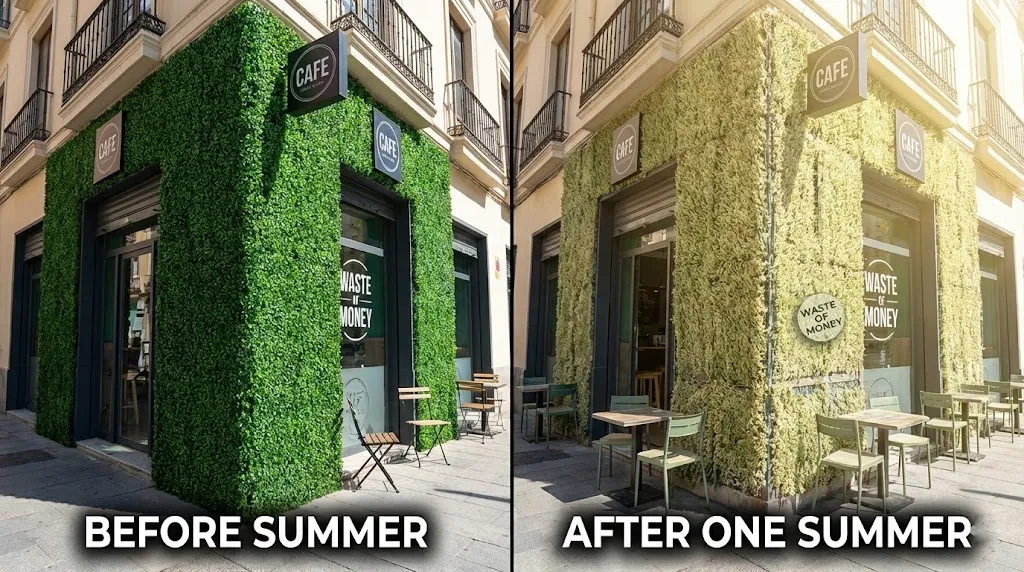
We have seen a classic cautionary tale before. A street-side coffee shop was renovating, and to save money, the owner bought a batch of dark green boxwood panels without UV protection to hang on the exterior wall. After just one summer, the originally emerald green leaves faded, looking very unsightly. So, if you plan to put plants outdoors, do not hesitate—you must look for products labeled “UV Resistant”; otherwise, it is a waste of money.
Impact of Temperature
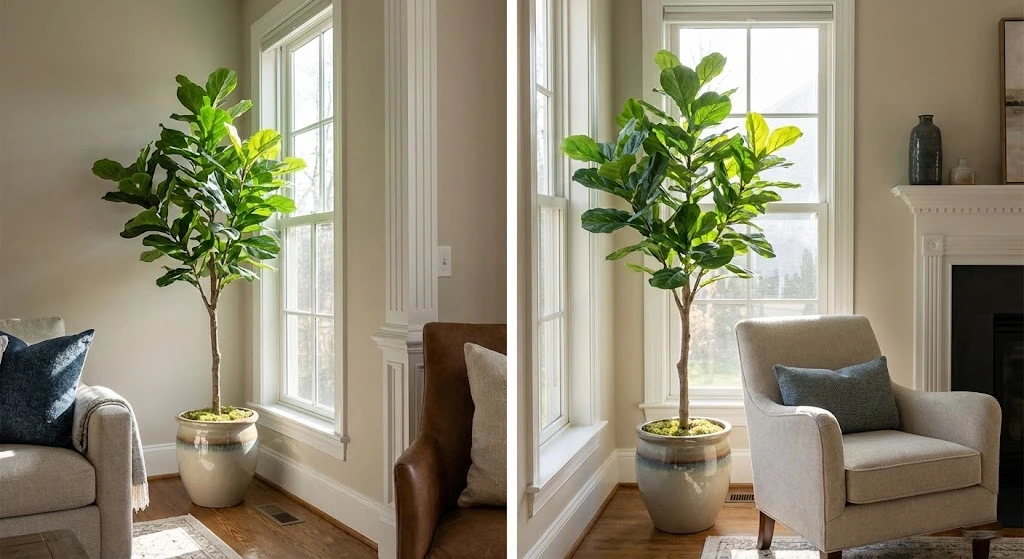
Many florist owners like to place beautiful artificial trees right against the window glass. But you need to know that when summer sunlight shines through the glass, the temperature in that small window area can soar to over 60°C. Under this high-temperature “baking,” the plastic softens, and the originally upright branches will permanently bend and droop, never to be straightened again. In extremely cold winters, plastic becomes brittle like glass and shatters at a touch. So, when arranging them, remember not to place them right against the glass window, and try to keep the ambient temperature within a range comfortable for humans.
Impact of Humidity
Everyone knows fake plants do not need watering, but that does not mean they like humidity. This mainly depends on the material: all-plastic ones are not afraid of water, but those with fabric (such as silk flowers or real-touch cloth) fear moisture the most.
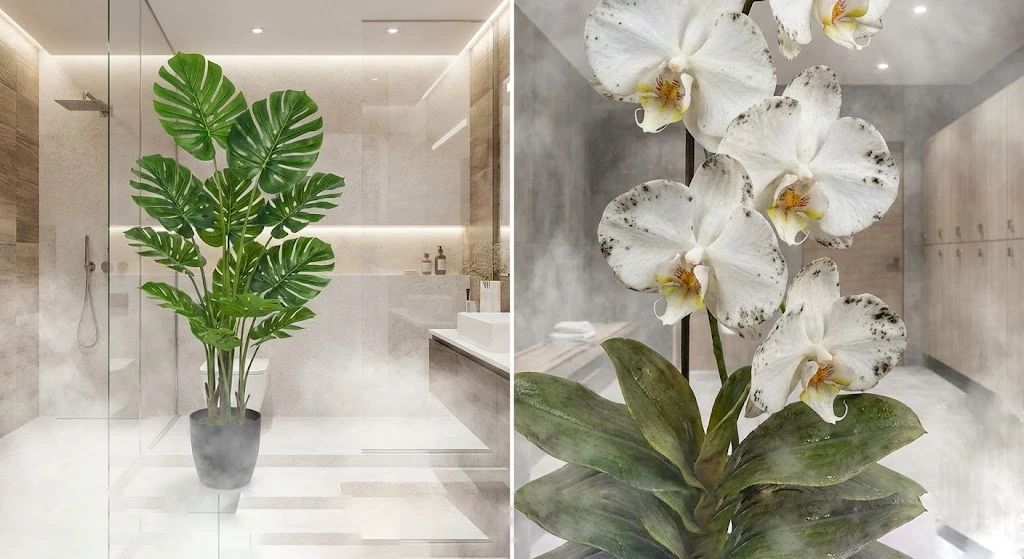
The surface of silk leaves has many tiny pores, which are particularly prone to absorbing moisture and dust. We encountered a high-end spa that placed several pots of expensive “real-touch” orchids in the steam room’s changing area. At first, they looked very upscale, but because the humidity remained above 90% for a long time, after just three weeks, un-washable black mold spots grew on the edges of the white petals.
Remember, if you want to use artificial plants in bathrooms, restrooms, or damp outdoor areas, be sure to choose 100% PE material. Never use any fabric-based artificial plants, or mold is inevitable.
How to Prolong the Lifespan of Fake Plants
Although artificial plants do not need watering or fertilizing like real flowers, a little simple maintenance often produces immediate results. Here are three practical tricks we have summarized ourselves to extend the life of your fake plants.
Regular Cleaning
Many people think fake plants do not need water, so they never clean them. Actually, dust is not just dirty to look at; it also accelerates leaf aging.
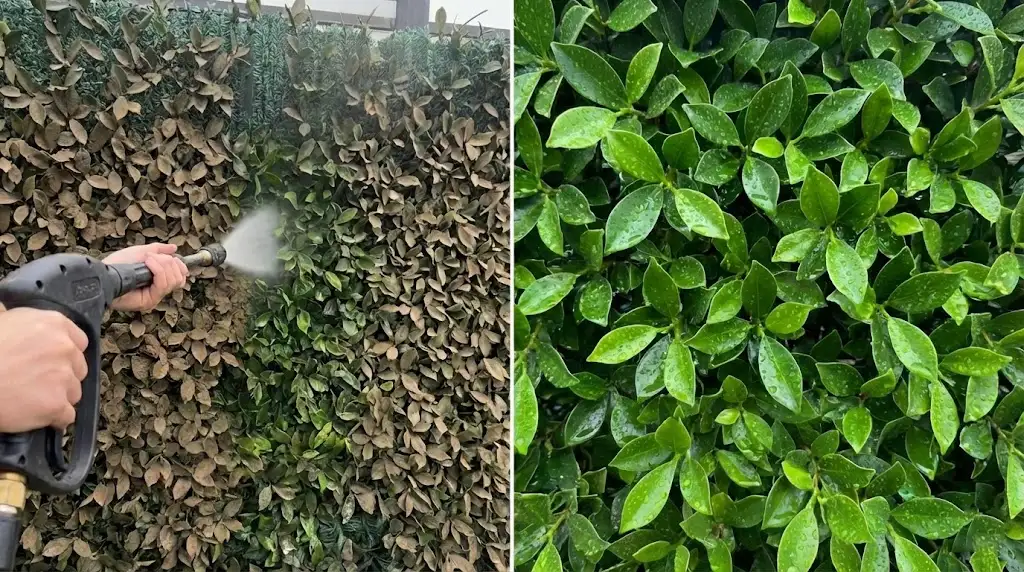
I remember revisiting an old client who even planned to throw away all the artificial hedges in his courtyard, saying “the color is dull and unwatchable.” We sent someone over, and just by using a high-pressure water gun to wash off two years of mud and dust, those leaves immediately restored their original brightness, looking like new. So, for outdoor artificial plants, hose them down every few months; for indoor ones, wipe them with a damp cloth. This is not just for aesthetics, but also for cooling.
Regular Rotation
If your artificial plant is placed by a window or on a terrace, an awkward situation can easily occur: the side facing the sun fades to white, while the side facing away remains lush green. Once this happens, the artificial tree is basically ruined and looks very ugly.
The solution is actually very simple: rotate the pot 180 degrees every six months. This way, even if the color lightens slightly after many years, it is overall uniform and visually undetectable. This simple trick can extend the service life of artificial plants by at least two to three years.
Apply UV Protection Spray
Even for the best UV resistant products, after 3 years, the surface protection layer will start to slowly weaken. At this time, you do not need to rush to replace them with new ones.
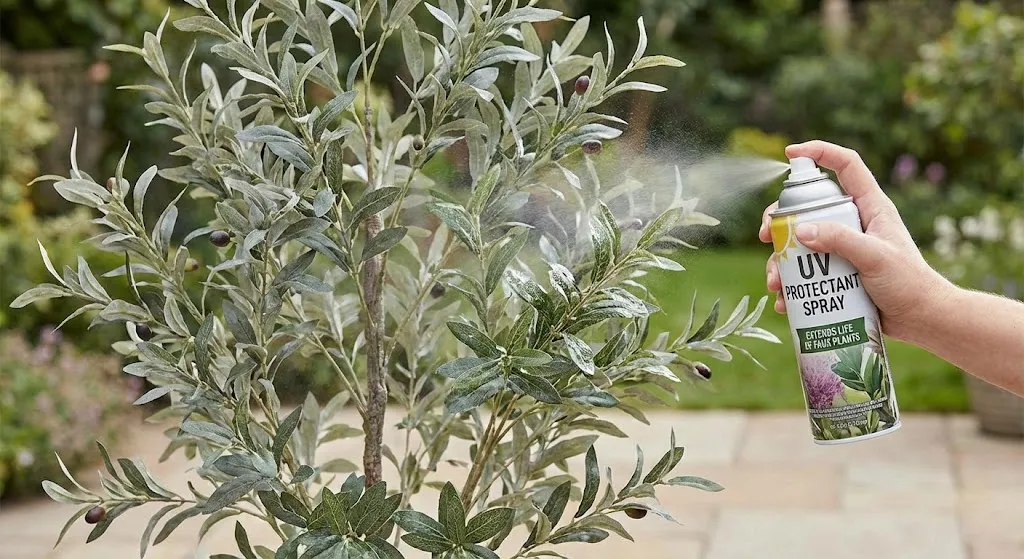
We often suggest to clients with limited budgets to buy high-quality UV protection spray. Spraying a layer on those old artificial plants that have been used for three or four years is like applying a protective coat to them. This cost is extremely low, but it can often help your plants serve for another one to two years. Especially for those expensive large artificial trees, this trick offers extremely high cost-performance.
Signs That Artificial Plants Need Replacing
Discoloration and Fading
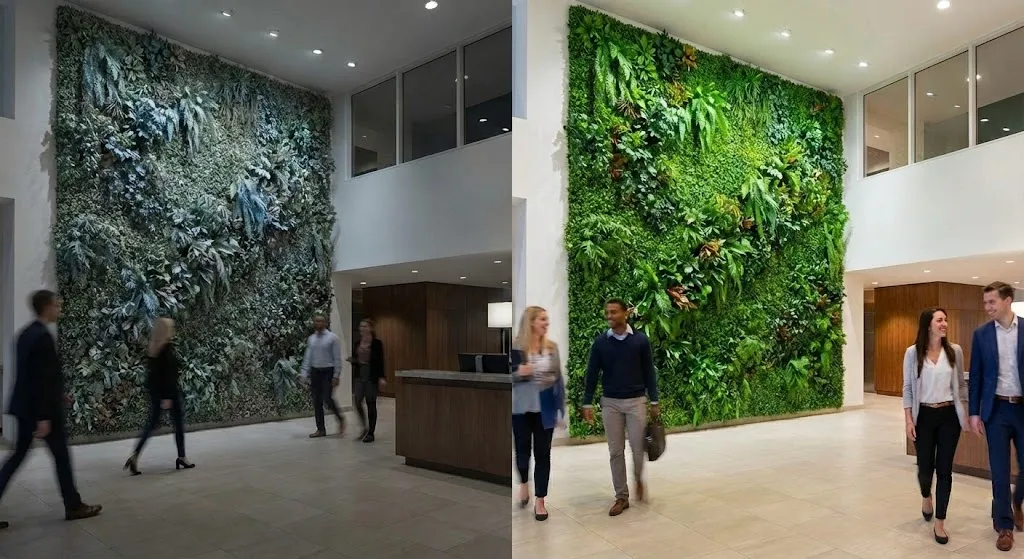
This is the most conspicuous and common signal. Why does it fade? Under long-term sun exposure, the pigments in artificial plants are decomposed by UV rays, eventually leading to discoloration or turning grey.
We previously helped a hotel renovate their lobby; their artificial plant wall had completely faded. Guests felt gloomy as soon as they walked in, with absolutely no sense of vitality. Once your fake plants start fading or turning blue, it means oxidation is already very severe.
Brittle Leaves
Good artificial plants should be tough and flexible like real leaves. But when the plasticizers in the plastic have completely evaporated, the leaves will become as brittle as potato chips.
You can test it yourself: pinch a leaf and bend it. If it feels stiff, makes a creaking sound, or even cracks directly, it means its structure has completely failed. At this point, do not keep it, because shattered plastic shards are not only hard to clean up but can also easily scratch people.
Spots Appearing
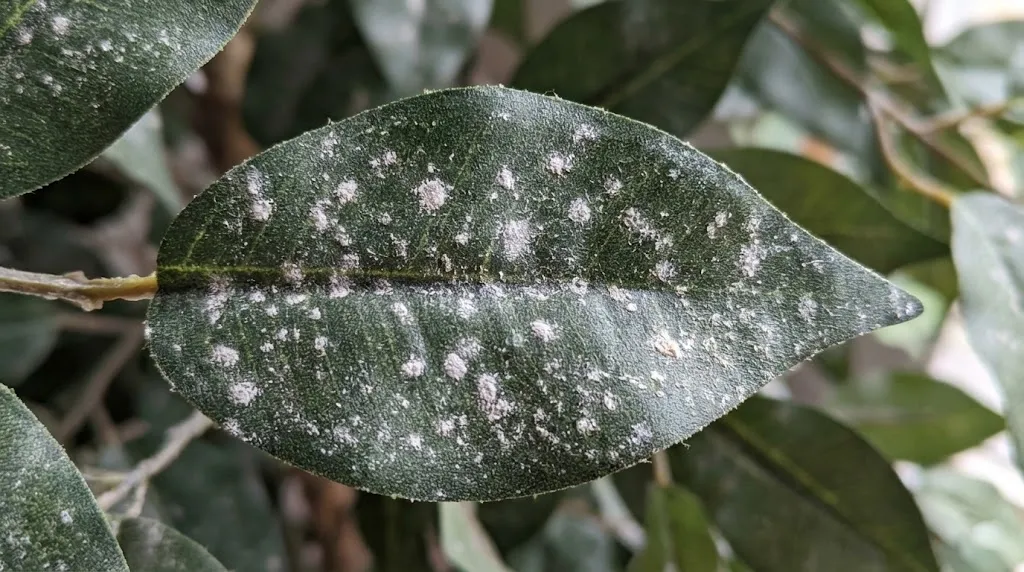
If you find some white, powdery spots appearing on the leaf surface, and they cannot be wiped clean, or they grow back a few days after wiping, that is not dust, nor is it mold; it is the plastic decomposing itself.
We once went to survey a rooftop garden; the client always thought the dust from the surrounding construction site was too heavy, causing the plants to always look dusty. As a result, when we touched them, our fingers were covered in white powder. This powder is very difficult to wash off if it gets on guests’ dark clothes. If your artificial tree starts shedding this white powder, it means it is time to replace it.
Conclusion
So, how long do artificial plants actually last? If you buy cheap outdoor silk plants, expect them to last only a few months. But if you invest in commercial-grade, UV-treated artificial plants, you can enjoy 3 to 5 years (or even longer) of maintenance-free beauty.
TwinkleTrees’ plants are meticulously engineered and produced to withstand the test of various harsh weather conditions. Don’t waste money replacing cheap plants every season—invest in high-quality plants that last.
Shop Our UV Resistant Collection
FAQs about Artificial Plant Lifespan
1. Do artificial plants fade in the sun?
Yes, all matter eventually changes under UV radiation. However, high-quality artificial plants with UV stabilizers can resist fading for years, whereas plants without UV stabilizers will fade within weeks.
2. Can I put indoor artificial plants outside?
We do not recommend doing so. Indoor artificial plants usually lack the UV treatment and robust stem structure needed to withstand wind and sun. They are likely to fade or break quickly.
3. How long does artificial turf last?
Artificial turf is the most durable category, typically lasting 15 to 20 years because its fibers are extremely thick and heavily UV stabilized.