The Ultimate Guide to Boxwood Shrubs for Modern Landscaping
When it comes to modern landscape design, one concept reigns supreme: Green Geometry. Architects and designers rely on crisp lines, structured borders, and lush, dense foliage to create spaces that feel both luxurious and organized. At the heart of this design philosophy is the classic boxwood shrub.
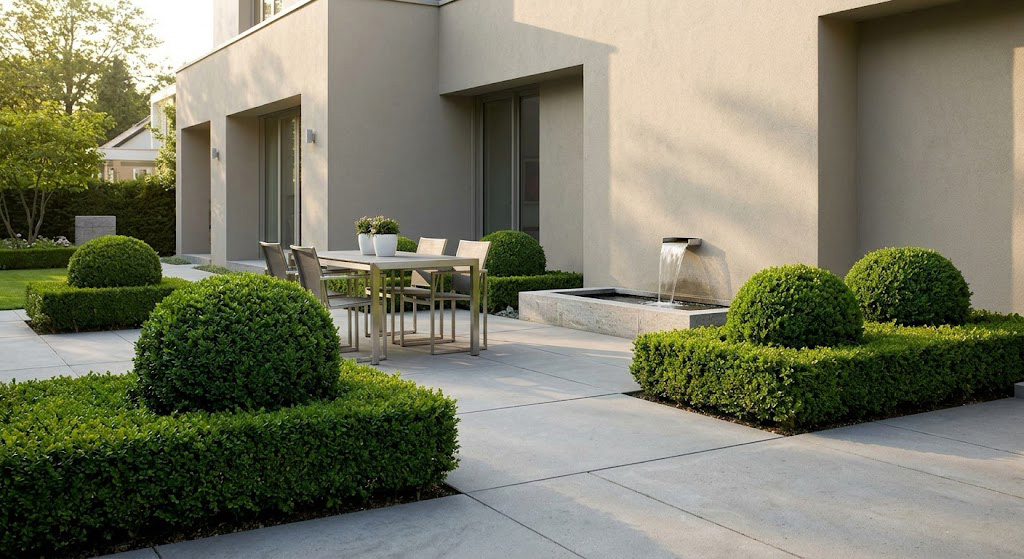
Boxwoods have been a staple in formal gardens for centuries, but their versatility makes them equally perfect for contemporary, minimalist, and commercial landscapes. However, achieving that perfect, manicured look comes with hidden challenges.
In this comprehensive guide, we will break down the best boxwood varieties for specific landscaping needs, explore modern design ideas, and reveal why top landscape contractors are increasingly turning to high-quality artificial alternatives to maximize ROI and eliminate maintenance headaches.
Part 1: Top Boxwood Varieties by Landscape Need
Instead of overwhelming you with endless cultivars, we’ve categorized the most effective boxwood shrubs based on their best real-world applications.
1. Best for Hedges, Privacy Screens & Tall Borders
If your project requires creating outdoor rooms, defining property lines, or blocking unsightly views, you need varieties that offer height and dense vertical growth.
- American Boxwood (Buxus sempervirens): The traditional choice for tall screens. It can grow up to 10-20 feet and forms a dense, dark green wall. It’s ideal for classic-modern fusion designs.
- Japanese Boxwood (Buxus microphylla var. japonica): Excellent for hot and humid climates (Zones 6-9). It grows slightly faster and spreads wider, making it highly effective for filling in large privacy hedges quickly.
- Fastigiata Boxwood: Known for its narrow, pyramidal form. It provides excellent vertical architectural interest without requiring extensive width, perfect for tight commercial walkways.
2. Best for Topiaries, Spheres, and Container Planting
For sculptural entryways, precise geometric designs, and upscale planters, compact and slow-growing varieties are essential.
- English Boxwood (Buxus sempervirens ‘Suffruticosa’): The gold standard for low formal hedges and knot gardens. Its dwarf nature and cloud-like growth make it perfect for precise edging.
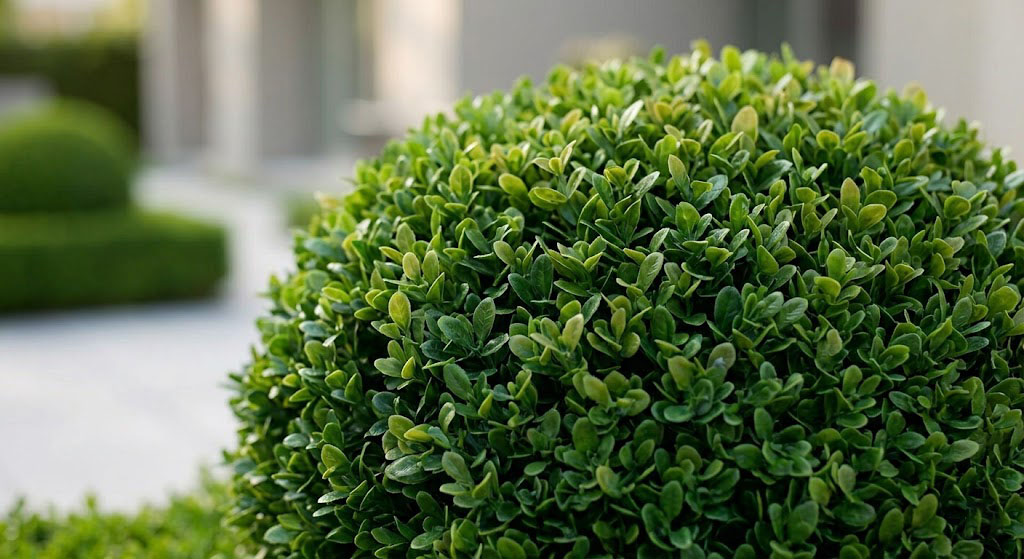
- Green Velvet Boxwood: A designer favorite because it naturally forms a near-perfect sphere. It retains its deep green color well and requires slightly less pruning to maintain its globose shape.
3. Best for Extreme Climates & Cold Hardiness
Landscaping in areas with harsh winters requires durable varieties that won’t succumb to winter burn or extreme freezing.
- Korean Boxwood (Buxus sinica): Survives extreme cold down to Zone 4. It features a compact form and slightly lighter green leaves, combining incredible durability with elegance.
- Wintergreen Boxwood: True to its name, this variety is highly prized for retaining a vibrant, rich green color throughout the winter months, avoiding the bronze or yellowing effect that plagues other types.
(Pro Tip for Designers: Always check your local USDA Hardiness Zone before specifying live plants for a commercial bid.)
Part 2: Modern Landscaping Design Inspiration
How are top-tier designers using boxwood in today’s projects? Here are three high-impact applications:
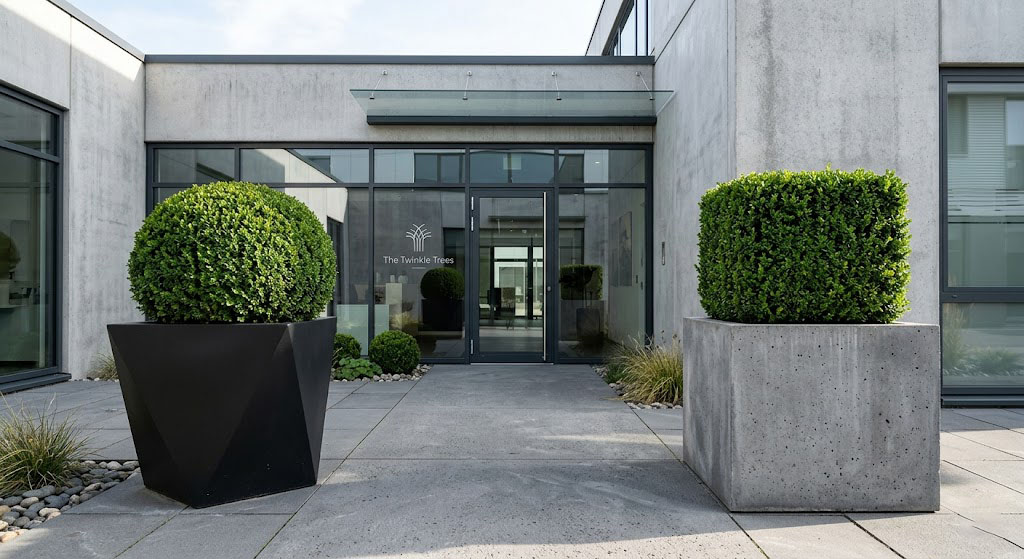
- Sculptural Entryways: Placing manicured boxwood globes in oversized, matte-black or concrete planters flanking a doorway creates a powerful, high-end first impression for corporate lobbies or luxury homes.
- Resort-Style Pool Framing: Low, continuous boxwood hedges paired with white hydrangeas or ornamental grasses provide sophisticated privacy around pool decks without the visual heaviness of a fence.
- Rooftop Terraces & Dining Zones: Using boxwoods in long trough planters to frame outdoor dining areas or cafe seating instantly defines the space and adds acoustic dampening and privacy.
Part 3: The Reality Check – The Hidden Costs of Live Boxwoods
While live boxwoods are undeniably beautiful, they are becoming a liability for commercial properties and busy homeowners. If you are a landscape contractor or project manager, you know that the initial planting is only 10% of the job. The real challenge is maintenance.
- The Boxwood Blight Epidemic: This devastating fungal disease can wipe out an entire landscape overnight. Once infected, leaves drop rapidly, leaving behind bare, unsightly twigs. Replacing mature, diseased hedges costs thousands of dollars.
- Relentless Maintenance: Achieving that crisp “Green Geometry” requires skilled, frequent pruning. Add in the costs of irrigation, fertilization, and pest control (like the notorious boxwood leafminer), and the long-term operational costs skyrocket.
- Winter Bronzing: In cold climates, many live boxwoods turn a sickly bronze or yellow in winter, ruining the aesthetic of your landscape precisely when you want evergreen structure the most.
Part 4: The Zero-Maintenance Solution: Twinkletree Commercial-Grade Artificial Boxwoods
More and more landscape architects, hotel managers, and B2B buyers are solving these pain points by switching to premium artificial plants.
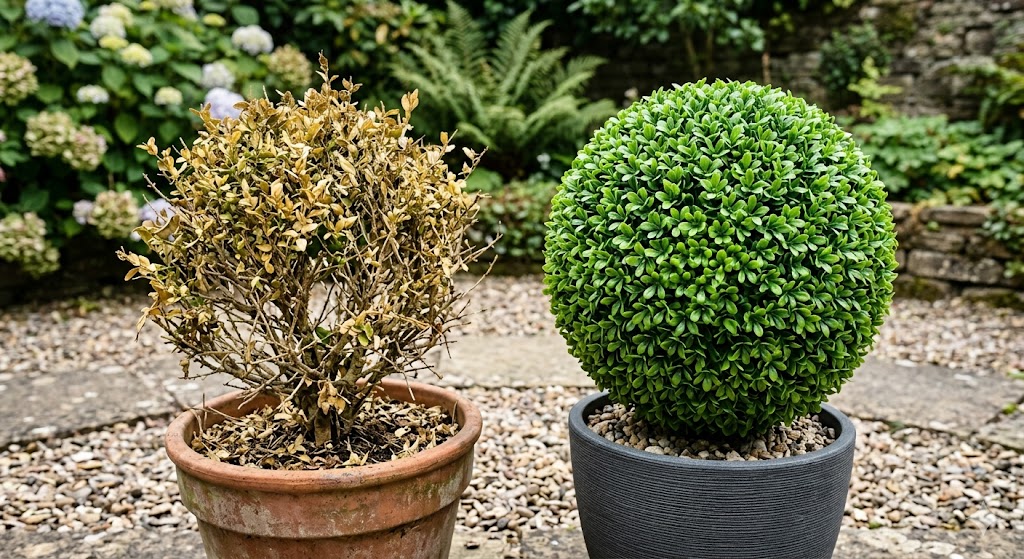
If you want the luxury of perfect green geometry without being held hostage by maintenance schedules, Twinkletree provides the ultimate solution.
Why Leading Projects Choose Twinkletree:
- 100% Zero Maintenance: No watering, no trimming, no fertilizers, and zero risk of Boxwood Blight. Your landscaping looks exactly the same on day 1,000 as it did on day 1.
- Engineered for the Outdoors (UV-Treated): Unlike cheap retail plastics that fade in the sun, Twinkletree’s artificial boxwoods are manufactured with advanced UV inhibitors built directly into the foliage, ensuring years of vibrant, sun-drenched color.
- Instant Maturity: Don’t wait 5 to 10 years for a live hedge to grow and fill in. With our artificial boxwood panels and topiaries, you achieve instant privacy and perfect scale the moment installation is complete.
- Unmatched ROI: While live plants are an ongoing expense, Twinkletree artificial boxwoods are a one-time capital investment that drastically lowers property maintenance budgets.
Frequently Asked Questions (FAQs)
Are artificial boxwood shrubs good for outdoor use?
Yes, provided you choose commercial-grade, UV-treated artificial boxwoods. High-quality options are specifically designed to withstand rain, snow, and intense sunlight without fading or degrading.
How long do artificial boxwood hedges last?
Premium UV-rated artificial boxwoods can last anywhere from 5 to 10+ years outdoors, depending on climate exposure, and indefinitely indoors.
Can you mix artificial boxwoods with real plants?
Absolutely. Many designers use a hybrid approach, using artificial boxwoods for hard-to-reach areas or structural shapes (like spheres and hedges), while planting seasonal live flowers around them for added texture and scent.